
As a personal trainer, I’m always looking for ways to help my clients break out of the gym routine and discover movement that feels less like “exercise” and more like adventure. Enter rucking—walking with a weighted backpack or vest—and honestly, I wish I’d introduced it to my clients sooner.
If you’re thinking “rucking sounds like something military,” you’re not wrong. But here’s what I’ve learned: this simple activity is one of the most effective ways to build strength, improve cardiovascular health, and support your body through the changes that come with middle age—all while getting outside and moving in a way that feels natural.
Let’s talk about what happens to our bodies as we age. After 30, we lose muscle mass at a rate of 3-8% per decade. Our bone density starts declining, especially after menopause. Cardio on its own often doesn’t address these changes effectively, but rucking? It tackles both head-on.
Walking with added weight is what we call “functional fitness”—it mimics real-life movements like carrying groceries, hauling luggage, or chasing after grandkids. Unlike some fitness trends that require perfect form and extensive learning curves, rucking builds on something you already know how to do: walk.
Bone Health: As a weight-bearing exercise, rucking helps maintain and even increase bone density—crucial as estrogen levels decline during perimenopause and menopause.
Muscle Preservation: That backpack or vest isn’t just challenging your legs. Your core, back, and shoulders are all working to stabilize the load, helping preserve muscle mass throughout your body.
Cardiovascular Fitness: Rucking elevates your heart rate into that sweet Zone 2 range—moderate intensity where you can still hold a conversation but definitely know you’re working.
Mental Clarity: There’s something meditative about the rhythm of walking with purpose. Many of my clients find that their rucking sessions become offer thinking time, stress relief, and a mental reset.
Low Impact: Unlike running, rucking is gentle on joints while still providing an intense workout. It’s perfect for anyone dealing with knee issues or other joint concerns.
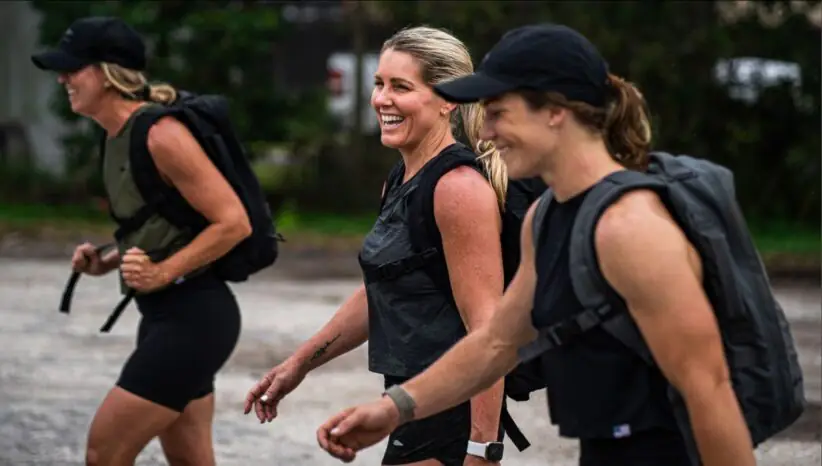
Start with what you have. Grab a sturdy backpack and load it with 10-15 pounds—water bottles, books, or canned goods work perfectly. The goal is to walk at a pace where you could maintain a conversation, covering 1-2 miles at first.
Here’s my progression strategy for clients: Master walking comfortably for 30 minutes without weight first. Then add 10% of your body weight to your pack and see how that feels. Gradually increase either the weight, distance, or duration—but never all three at once.
The beauty of rucking is its simplicity. You don’t need a gym membership, special classes, or expensive equipment to get started. Just you, a backpack, and the willingness to explore your neighborhood differently.
As someone who trains busy professionals and moms in their 40s and 50s, I know finding time for fitness is challenging. Rucking can double as errands—walk to the store with a weighted pack, then fill it with groceries for the return trip. It’s multitasking at its finest.
Plus, rucking is incredibly social. Some of my favorite client sessions have been rucking adventures where we catch up on life while tackling hills or hikes around Seattle. The shared challenge creates connection in a way that’s hard to replicate in a gym setting.
Q: How much weight should I start with?
A: Begin with 10-15 pounds, or about 10% of your body weight. You should be able to maintain good posture and a steady pace. If you’re hunching forward or struggling to keep up your normal walking speed, reduce the weight.
Q: Is it safe to ruck every day?
A: Start with 2-3 times per week with rest days in between. Your shoulders, back, and core need time to adapt to carrying the load. Cross-train with activities like yoga or swimming on off days.
Q: What if I have back problems?
A: Consult your healthcare provider first, but many people with back issues actually find rucking strengthens their core and improves posture over time. Start very light and focus on maintaining upright posture.
Q: Do I need special equipment?
A: Not initially! Use any sturdy backpack with wide, padded straps. As you progress, you might invest in a rucking-specific pack with better weight distribution or a vest (like the one from my friends at The Carry Co—another Seattle women-owned business), but it’s not necessary to start.
Q: How do I know if I’m overdoing it?
A: Listen to your body. Some muscle fatigue is normal, but sharp pain, especially in your back or shoulders, means you need to reduce weight or take a rest day.
Ready to give rucking a try? Start small, stay consistent, and prepare to discover a new way to move that supports your body for the long haul. Your future self will thank you for building this kind of functional strength now.